


The Confidence Wheel: A Simple Framework for Knowing Where to Start

After a diagnosis — whether ADHD, autism, or both — one of the most common questions I hear from parents is: "There's so much to think about. Where do we even start?"
The honest answer is: not everywhere at once. Trying to change every part of daily life simultaneously is exhausting for parents and confusing for children. What tends to work far better is identifying the one or two areas that matter most right now, and focusing there first.
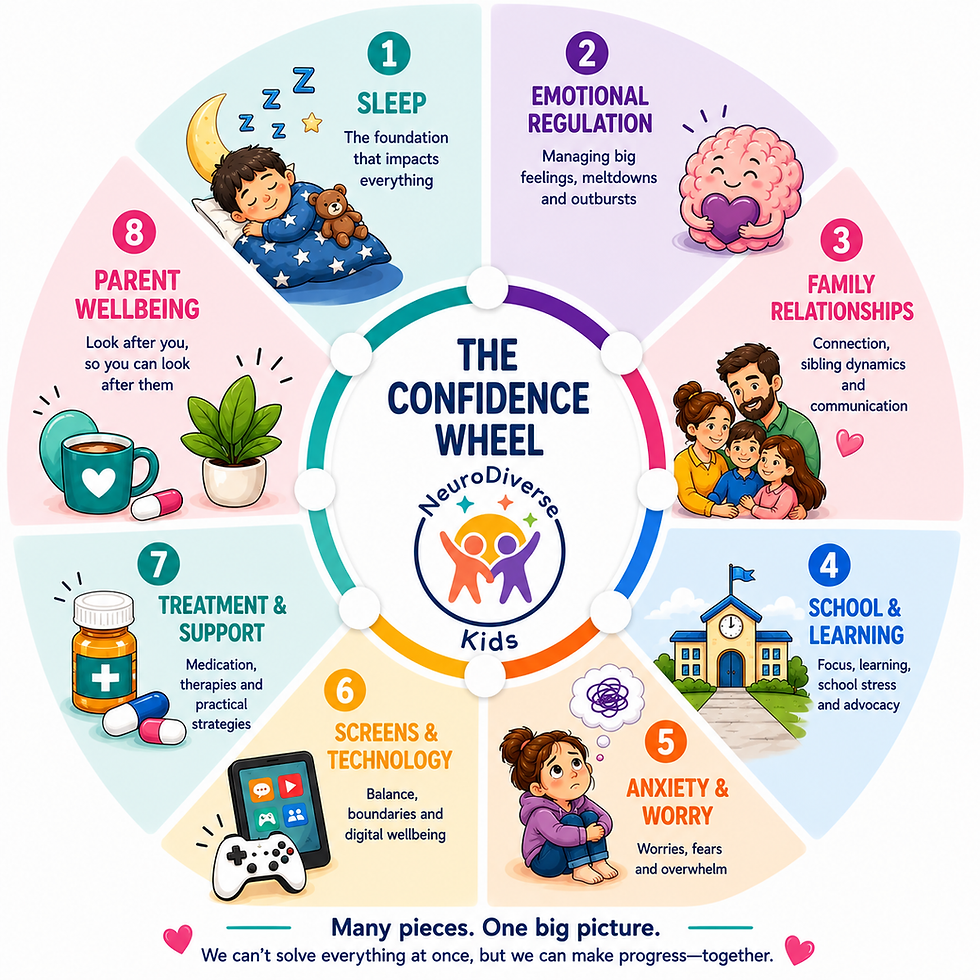
That's the idea behind The Confidence Wheel — a simple way of mapping out the key areas of a child's life that are commonly affected, so you can see at a glance where the pressure points are.
The 8 areas of the wheel
The framework breaks daily life into eight areas:
1. Sleep— often the single highest-leverage area. Poor sleep makes everything else — mood, behaviour, learning — harder.
2. Emotional regulation — how big feelings are managed, both the child's and the family's around them.
3. Family relationships — the wider impact on siblings, parents, and the household as a whole.
4. School and learning — the day-to-day experience in the classroom and relationship with staff.
5. Anxiety and worry — how much anxiety is showing up, and how it's being managed.
6. Screens, technology and balance — how technology fits into daily life without becoming a battleground.
7. Support and treatment — how well-connected the family feels to the right professional and practical support.
8. Parent wellbeing — how the parents themselves are coping, separate from how the child is doing.
Why a "wheel" rather than a checklist
The wheel format matters because it resists the urge to treat this as a checklist to complete. Instead, you rate how strong or shaky each area currently feels, which usually reveals one or two spokes are noticeably weaker than the rest. Those are your starting points — not all 8 at once.
For most families, sleep is the first place worth looking, simply because so many of the other areas improve on their own once sleep is more settled.
For a deep-dive on sleep, I recently hosted a 45 minute webinar- you can watch the Replay here.
Using it yourself
You don't need anything complicated to use this. Take the 8 areas above, and honestly rate each one out of 10 for how things feel right now. Wherever the lowest scores land, that's where to focus your energy first — and revisit the wheel every few weeks, since the picture shifts as things improve.
There's no fixed order and no right answer. It's simply a way of turning an overwhelming list of "everything that could be worked on" into a clear, manageable starting point.


Comments