


How is ADHD diagnosed?
- Dr Harry Woodward

- Dec 8, 2025
- 3 min read
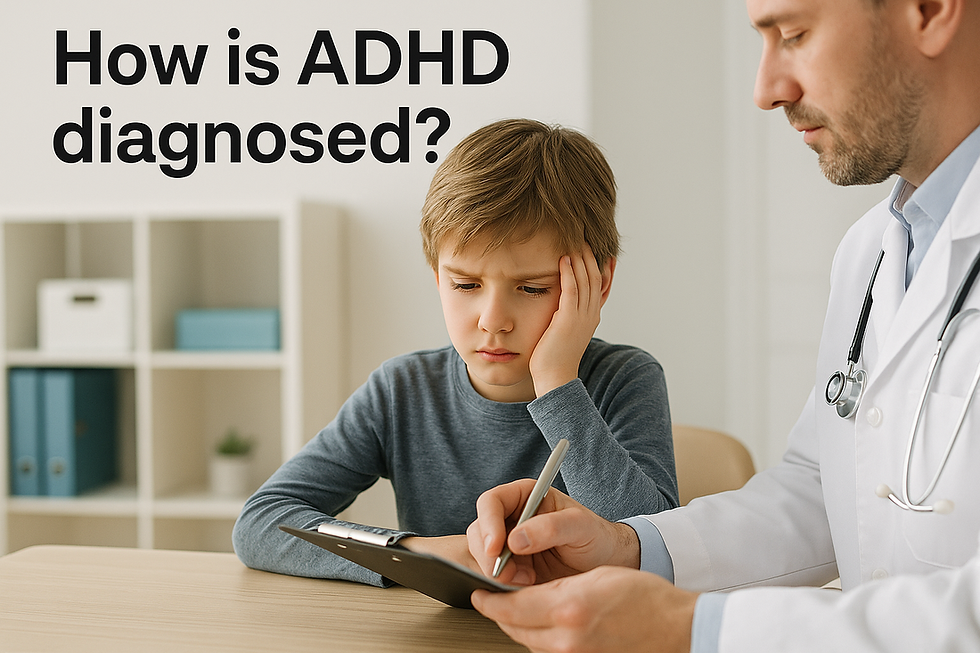
AI generated image
If you’ve ever wondered how on earth professionals figure out whether a child has ADHD—and not simply a spectacular case of “being five”—you’re in the right place. ADHD diagnosis can sound mysterious, clinical, or slightly like something conducted in a lab with goggles and a clipboard. Thankfully, it’s nothing like that.
In reality, ADHD assessments are structured, evidence-based, and… surprisingly human, with a big focus on understanding your child’s day-to-day experience. Let’s walk through the process together, kettle on, judgement firmly off.
What ADHD is (and isn’t)
ADHD isn’t about laziness, bad parenting, too much screen time, or a personality quirk. It’s a recognised neurodevelopmental condition described in diagnostic guidelines like the NICE ADHD guidance (UK) and DSM-5 criteria (international), which outline the symptoms and patterns clinicians look for.
It also isn’t diagnosed from a 10-minute chat, a single questionnaire, or “my cousin said so.” A proper assessment is careful, comprehensive, and focused on the full picture—not just behaviour on a busy Thursday morning.
So… how is ADHD actually diagnosed?
1. A Detailed Developmental & Medical History
This is the foundation of any good ADHD assessment. A clinician (often a paediatrician, psychiatrist, or specialist psychologist) will spend time understanding:
Early development
School experiences
Strengths, challenges, and emotional wellbeing
Family history
Any other health or learning differences
This part is calm, conversational, and usually involves parents doing most of the talking while wondering how their child survived toddlerhood.
2. Behaviour rating questionnaires
These are standardised forms completed by parents and teachers, comparing your child’s behaviour to children of the same age.
Common examples include the Vanderbilt or Conners questionnaires. They help identify patterns of attention, impulsivity, hyperactivity, and executive function skills across different settings.
3. School information
Because ADHD isn’t a “home-only” condition, clinicians need insights from school:
Classroom behaviour
Learning profile
Social interactions
Any existing support
Teacher observations
This isn’t about “catching kids out”—it’s about understanding their day-to-day reality.
4. Clinical interview with the child or teen
This is age-appropriate, friendly, and focused on understanding the child’s strengths, worries, frustrations, and how they approach tasks. No child is expected to “perform” ADHD symptoms; professionals are trained to spot the subtle stuff.
5. Ruling out other causes
Some difficulties look a bit like ADHD but need different support. Clinicians consider:
Anxiety
Sleep issues
Autism
Learning differences
Hearing or vision problems
Emotional stressors
This step makes sure the diagnosis is accurate—not rushed.
6. Putting the whole picture together
An ADHD diagnosis is made when the clinician confirms that:
Symptoms meet recognised criteria (e.g., DSM-5)
Difficulties show up in more than one setting
Symptoms have persisted for at least six months
Challenges significantly affect daily life, wellbeing, or learning
This “whole-child summary” is shared with parents in a clear, compassionate way—no jargon, no judgement, and no doom.
What an ADHD diagnosis gives you
A good assessment opens doors, not labels:
Understanding your child’s struggles (and strengths!)
Tailored support at home and school
Access to reasonable school adjustments
The option for evidence-informed interventions
A shared language to support emotional wellbeing
And perhaps most importantly, many parents say diagnosis brings a sense of relief. Things finally make sense.
How private and online clinics help
At NeuroDiverseKids, we offer assessments that are:
Professional and evidence-based (following NICE guidelines)
Warm, family-focused, and child-centred
Convenient for busy parents through online appointments
Collaborative with schools and other professionals
Our aim is simple: to help families understand their child’s neurodevelopmental profile with clarity, compassion, and zero judgement.
Helpful, trustworthy links
NICE ADHD Guidelines
NHS Overview of ADHD
CDC ADHD Facts


Comments